


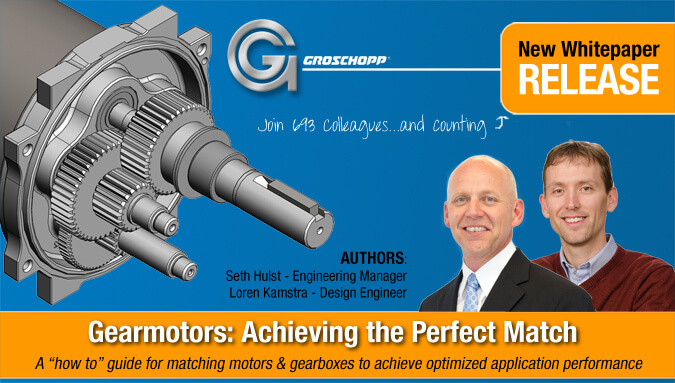

For electrical and mechanical design engineers in the process of developing applications, choosing a gearmotor can be a tricky and
arduous process. Can motors and gearboxes be purchased separately and then matched for an application? Is it better to specify a pre-engineered gearmotor? What are the differences?
Focusing on how to choose the right motor/gearbox combination for your OEM
 application; this whitepaper will explain cost optimization, performance and other critical application considerations. Outlining the basic motor and gearmotor types and the advantages of each choice will help a designer more easily calculate and choose the best gearmotor for the required application. Even if a new gearmotor is not needed immediately, many of the ideas presented will help audit a current gearmotor’s performance within an application.
Learn how to:
- Interpret ratings and characteristics of various gearbox types as a “total picture”
- Select the right motor based on gearbox ratings
- Identify key application and performance characteristics (beyond speed, torque and life) such as yield strength, operating speed, mounting position, and loading
- Avoid common mistakes such as selecting a motor that is too large, problems with overheating, and miscalculating yield torque
- Why thermal and mechanical factors limit gearbox efficiency and performance
- Understand the effect of torque density on the heat and life of a motor
- Tips for selecting the correct gearbox ratio

Groschopp offers two invaluable timesavers: the “Application Considerations Checklist,” and the downloadable STP Calculator, which performs a number of useful calculations, such as current required, speed, torque, and power calculations.
