

Video Links
Video Transcript
Hi, this is Janette and I’m Joe with Groschopp. Welcome to the second of ten videos in our series: “How to Choose an Electric Motor.” In these next two videos, we’ll be discussing important application criteria. Part one will cover application constraints and part two will cover motor performance.
Each criterion we share is important to the motor selection process, and is typically unique to each application.
As you can see, there are a number of criteria to consider.
Instead of addressing each of these individually, we’ll focus on the constraints and performance factors that are often overlooked but can be critical to motor design and the overall system solution. As a quick side note, we’ve provided a link below to download our application checklist.
Let’s start with the first constraint: input power. You need to know what the available voltage, frequency, and current limits are and if a control will be needed to manage the motor within the application.
Pay close attention to the maximum allowable current early in your selection process. Often times it can be overlooked until the testing phase when failures occur.
To clarify, let’s look at a quick example.
Medical patient lifts use standard electrical wall outlets as the power source. We generally need to limit the current to fifteen amps in order to meet UL requirements and not overload the electrical system.
When considering current, you should also look at efficiency. Current and efficiency can be changed by the style of gearbox, input power or other factors. Our experience shows us that many applications need to maximize the output power from the motor as much as possible. One way to draw less current is by using a more efficient gearbox, such as a planetary reducer, over the less efficient worm gear design.
Now let’s talk about some environmental constraints, specifically particle ingress and temperature.
Most standard motors are built to operate in a clean, dry, room-temperature environment. This is fine for many applications, but if your motor will be subject to temperature extremes, dust or water contamination, or corrosion, you may need to think about a motor with special construction.
We have two reference tools to help you with these environmental specifications.
The first is our ingress protection chart, or IP for short.
We’ve included a link to it in the description. IP ratings are used to provide an industry-wide understanding of a motor’s protection against dust and water.
For example, a motor rated IP65 would be considered “dust tight” and “splash-proof.”
Our standard motors are built with either IP40 or IP44 ratings, but we can increase the protection as needed.
Our second reference tool is a chart for UL temperature class ratings.
This will give you a general idea of how hot the internal temperature of the motor can go before it will start to see damage. For example, temperature class “B” means that the maximum temperature is 130 degrees Celsius, and that if this temperature is exceeded, the life of the motor will be shortened. This chart helps you determine what level of protection you need for your motor to run in extreme temperatures.
Here’s a rule of thumb, for every ten degrees Celsius that your application exceeds the maximum temperature rating, the motor life is cut in HALF!
Up next is part two of “application criteria” where we’ll discuss performance factors. You don’t want to miss it. Check out the links below for our application checklist, IP ratings chart and UL motor temperature chart. For more information about Groschopp or any of our products, check out our website at www.groschopp.com.
Additional Videos
-


Gear Motor Basics | Case Studies
We’re taking everything we’ve discussed and applying it in three scenarios. Any gear motor will work for most applications, but there’s usually only one or two types that are best.
-

Gear Motor Basics | Matching Gear Motors – Integrated Solutions
In this video we discuss how to select a gear motor in four simple steps by choosing an integrated gear motor.
-
Gear Motor Basics | Matching Gear Motors – Motor Selection
This video continues our discussion of selecting a gear motor by pairing the separate components. Now we look at how to select a motor based on the reducer selected for the application.
-
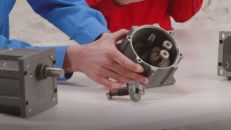
Gear Motor Basics | Matching Gear Motors – Reducer Selection
In this video we begin our deep dive into gear motor selection. There are two methods for pairing motors and reducers to create the optimal gear motor. Here we begin with the first method by taking a look at gear box selection.
-

Gear Motor Basics | Application Parameters
This video covers the important application criteria that need to be considered when selecting a gear motor.
-
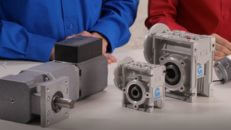
Gear Motor Basics | Right Angle Reducers
Right Angle reducers are great for applications where size and space are at a premium. With the ability of the output to turn a 90 degree corner.
-
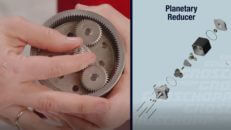
Gear Motor Basics | Planetary Reducers
Planetary reducers are ideal for applications requiring high torque in a small package and an output shaft with coaxial alignment. We'll discuss the construction, characteristics, advantages and disadvantages of Planetary gearboxes.
-

Gear Motor Basics | Parallel Shaft Reducers
Parallel shaft gearboxes are an ideal solution for continuous duty applications; applications requiring low torque; applications with higher ambient temperatures; or applications that are cost conscious.
-

Gear Motor Basics | An Introduction to Gear Motors
In this video we give a quick overview of motors and explain the rationale for using gear motors - why using a reducer (gearbox) with a motor enables the use of a smaller motor and increased torque and/or speed.
-

Tech Tip: Troubleshooting an Overheating Motor
Even when the motor matches the application on paper, you can still run into new variables while testing. Here are six common checks to help determine why your motor may be overheating.
-

Tech Tip: Planetary Gearboxes
In this video we discuss planetary gearboxes. Learn the ins and outs of how these reducers work as well as their advantages and disadvantages.
-
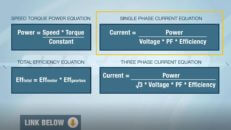
How to Choose an Electric Motor: Engineering Tools
As we round out this video series, we will share several motor calculation formulas and other tools to help you with the selection process.
-

How to Choose an Electric Motor: Case Studies
We’re taking everything we’ve discussed and applying it in three scenarios with varying levels of customized motors. Any motor will work for most applications, but there’s usually only one or two types that are best.
-

How to Choose an Electric Motor: Custom Built Electric Motors
In this video we hope to ease any concerns you may have about what’s involved in customizing a motor to fit your application. You don’t have to take a standard motor and try to make it “fit” your application.
-

How to Choose an Electric Motor: Brushless DC Motors
In this video we discuss the construction, characteristics, advantages and disadvantages of BLDC Motors. We'll also look at the BLDC motor performance curves for speed, torque and efficiency.
-

How to Choose an Electric Motor: AC Motors
In this video we discuss the construction, characteristics, advantages and disadvantages of AC Motors. We'll also look at the AC motor performance curves for speed, torque and efficiency.
-
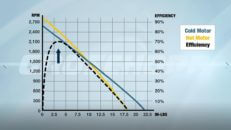
How to Choose an Electric Motor: DC Motors
In this video we discuss the construction, characteristics, advantages and disadvantages of DC Motors. We'll also look at the DC motor performance curves for speed, torque and efficiency.
-
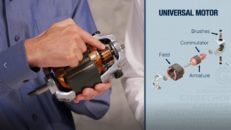
How to Choose an Electric Motor: Universal Motors
In this video we discuss the construction, characteristics, advantages and disadvantages of Universal Motors. We'll also look at the Universal Motor performance curves for speed, torque and efficiency.
-

How to Choose an Electric Motor: Application Criteria (Part 2)
This is part two of our discussion on application criteria. It seems obvious, but we like to remind our customers to always consider the maximum size and weight of motor their application will allow, and to know what kind of life expectancy the motor will need to have.
-

How to Choose an Electric Motor: Application Criteria (Part 1)
This video (and the next) cover important application criteria, first we'll focus on application constraints that need to be taken into consideration during the design process.
-

How to Choose an Electric Motor: Introduction & Basics
Selecting the right motor can be a complicated process. In this first video we introduce the basic concepts of electric motors.
-

How To Switch Your Voltage between 12V and 24V-48V on a Groschopp Brushless Control
This video shows a short step by step tutorial on how to switch the output voltage on a Groschopp brushless control.
-
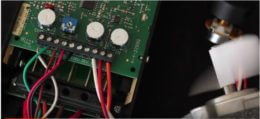
How To Set Current Limit on a Groschopp Brushless Control
This short video shows how to set your current limit on a Groschopp brushless control.
-
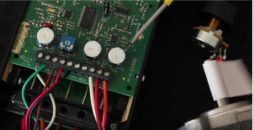
How To Set Gain on a Groschopp Brushless Control
Watch this video to learn about gain and how to set it on a Groschopp brushless control.
-

Groschopp Tech Tips: Motor Search Tool
This tutorial video shows you how to use Groschopp's motor search tool to find your ideal motor.
-

Tech Tips: Brushless Control Basics
By watching this video, you will learn the basics of all of Groschopp's brushless controls, their enclosure types, and low volt and high volt options.
-

Tech Tips: Oil vs. Grease
In this video, we will explain 7 factors to consider when deciding between oil and grease to determine which type of lubricant is best for your gear motor.
-
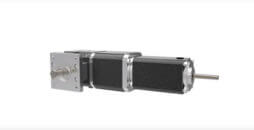
Planetary Right Angle DC Gear Motors
Groschopp offers a line of Planetary Right Angle DC Gear Motors that provide the advantages of standard right angle gearmotors without giving up efficiency.
-

Groschopp Introduces Customizations and 3D Models
Groschopp makes it easy for to choose the right motor or gearmotor by incorporating 3D models into each product page as well as on the customization pages.
-
Tech Tips: Brushless DC Motor Basics
This Tech Tips video explains the basics of Brushless DC Motors: how they are designed and how they operate.
-
Tech Tips: Back-Drive & Braking
This Tech Tips discusses the advantages of back-drive and brakes and the types of applications for which they are best suited.
-

Tech Tips: Duty Cycle
In this video we give you a quick guide to importance of duty cycle for the optimal operation of fractional horsepower motors and gearmotors.
-

Tech Tips: Harsh Motor Environments
How fractional horsepower motors are rated for harsh motor environments. Understanding IP ratings and harsh duty requirements is important to accurately communicate an application’s requirements.
-
Tech Tips: AC Motor Basics
Understanding the characteristics of AC motors allows engineers select the motor best suited to their application.
-

The Groschopp Advantage
What makes Groschopp a special company to work with for our customers? It all comes down to the people that make up the company. Find out how they're at the core of the Groschopp Advantage.
-
The History of Groschopp, Inc.
The rich history of Groschopp, Inc. begins in 1930 with a company called Wincharger. How did we get from Wincharger to Groschopp? Watch and find out.
-
Tech Tips: How to Check for a Damaged Armature
Here are three quick checks you can perform with a volt/ohm meter to test a DC motor armature winding to determine if a motor armature is functioning properly.
-

New DC Brushless Motor
Introducing a robust DC Brushless Motor and gearbox combinations. The new Brushless motor is maintenance-free, highly reliable and has a life of 20,000+ hours.
-

Select a Gearmotor – 4 Steps
This how to video guide covers the basics of gearmotor selection in four simple steps: including speed, torque and application requirements.
-

Manufacturing Marvels
View Groschopp's manufacturing, quality assurance and engineering capabilities and get an inside look at Groschopp's manufacturing facility and engineering lab located in Sioux Center, Iowa.
