

Understanding the characteristics of AC motors allows engineers select the motor best suited to their application.
Video Transcript: Groschopp Tech Tips – AC Motor Basics
Hello! This is Arlo with a Groschopp Tech Tip. Today we will be discussing AC Induction Motors basics, with a brief overview of single phase and 3-phase motors.
AC motors are the most common motor used in applications because they use AC voltage (available at every outlet), run quietly, have a long life, and are economical.
All AC motors have the same basic components, a stator and rotor. The stator is the stationary coils in the motor where the current is produced to create the magnetic field. This magnetic field induces a current in the rotor bars causing the rotor to rotate.
In a 3 phase motor, the current in the stator sets up a rotating magnetic field. The magnetic field rotates due to the 120° phase offset in each phase of the power supply. This rotating magnetic field induces a current in the bars of the rotor. The current in the rotor sets up its own magnetic field. The interaction between the stator and rotor magnetic fields causes the rotor to rotate. An important thing to remember with 3 phase motors is since they run off of 3 phases that are offset from each other, they are self-starting.
Single phase motors work on the same principle as 3 phase motors except they are only run off one phase. A single phase sets up an oscillating magnetic field that goes back and forth rather than a rotating magnetic field. This results in a true single phase motor having zero starting torque. However, once the rotor begins to rotate it will continue to rotate as a result of the oscillating magnetic field in the stator. There are many ways to start single phase motors. Most involve producing a second phase to help produce a rotating magnetic field in the stator. Some common types are the shaded pole motor, the split phase motor, the permanent split capacitor motor or single value capacitor motor), and the two value capacitor motor.
Since we are focusing on induction or asynchronous AC motors, we need to briefly discuss slip. Slip is the difference between the synchronous speed and the actual speed of the motor. Induction motors require slip to induce current in the rotor, and the amount of slip changes as the load on the motor changes. In order to change the speed of an induction motor, the frequency must be changed. This is accomplished by a motor control, and the most common is a Variable Frequency Drive (VFD). Without a control, the motor speed is fixed by the equation. Determining factors are input frequency and poles of the AC Motor.
Two key characteristics of AC motors to consider for any application are running speed and starting torque. First, let’s look at running speed. This is dependent on the power supply frequency, the number of motor poles and the amount of slip of the rotor. For line driven motors the pole count will be defined by the rotor speed less some slip due to load. The performance curve of the motor will show what the motor’s maximum available starting torque is.
The second characteristic of AC motors it starting torque. It is the chief limitation of the AC motor. Remember, if your application requires the motor to start with a load on it, consult your motor manufacturer to ensure the motor has enough torque to start at load and to ensure the correct motor type is specified for your application.
In comparison to single phase motors, 3 phase motors have a higher power density, a higher starting torque, and are more efficient than single phase motors. They start on their own, eliminating the need for a starting winding or capacitor. The same speed calculation applies to 3 phase motors as single phase, so a VFD is required to change the motor speed. Also, when a 3 phase power source is unavailable, controls are available to convert single phase power to 3 phase, making the 3 phase motor more versatile.
AC motors work great for a number of different applications, such as pumps, conveyors, and commercial products. Remember the key characteristics when considering an AC motor, and consult your motor manufacturer with your application specifications to ensure you are getting the correct motor for your application.
This has been a Groschopp Tech Tip. For more information about any of our products or to view other Tech Tips please visit us online at www.groschopp.com.
Additional Videos
Additional Videos
-


Gear Motor Basics | Case Studies
We’re taking everything we’ve discussed and applying it in three scenarios. Any gear motor will work for most applications, but there’s usually only one or two types that are best.
-
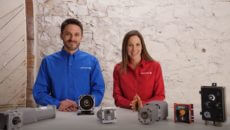
Gear Motor Basics | Matching Gear Motors – Integrated Solutions
In this video we discuss how to select a gear motor in four simple steps by choosing an integrated gear motor.
-

Gear Motor Basics | Matching Gear Motors – Motor Selection
This video continues our discussion of selecting a gear motor by pairing the separate components. Now we look at how to select a motor based on the reducer selected for the application.
-
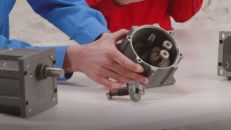
Gear Motor Basics | Matching Gear Motors – Reducer Selection
In this video we begin our deep dive into gear motor selection. There are two methods for pairing motors and reducers to create the optimal gear motor. Here we begin with the first method by taking a look at gear box selection.
-

Gear Motor Basics | Application Parameters
This video covers the important application criteria that need to be considered when selecting a gear motor.
-
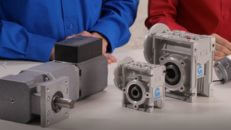
Gear Motor Basics | Right Angle Reducers
Right Angle reducers are great for applications where size and space are at a premium. With the ability of the output to turn a 90 degree corner.
-
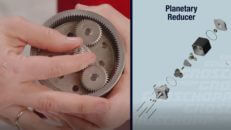
Gear Motor Basics | Planetary Reducers
Planetary reducers are ideal for applications requiring high torque in a small package and an output shaft with coaxial alignment. We'll discuss the construction, characteristics, advantages and disadvantages of Planetary gearboxes.
-

Gear Motor Basics | Parallel Shaft Reducers
Parallel shaft gearboxes are an ideal solution for continuous duty applications; applications requiring low torque; applications with higher ambient temperatures; or applications that are cost conscious.
-

Gear Motor Basics | An Introduction to Gear Motors
In this video we give a quick overview of motors and explain the rationale for using gear motors - why using a reducer (gearbox) with a motor enables the use of a smaller motor and increased torque and/or speed.
-

Tech Tip: Troubleshooting an Overheating Motor
Even when the motor matches the application on paper, you can still run into new variables while testing. Here are six common checks to help determine why your motor may be overheating.
-

Tech Tip: Planetary Gearboxes
In this video we discuss planetary gearboxes. Learn the ins and outs of how these reducers work as well as their advantages and disadvantages.
-
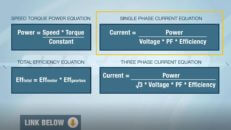
How to Choose an Electric Motor: Engineering Tools
As we round out this video series, we will share several motor calculation formulas and other tools to help you with the selection process.
-
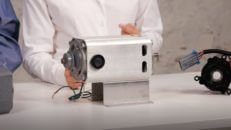
How to Choose an Electric Motor: Case Studies
We’re taking everything we’ve discussed and applying it in three scenarios with varying levels of customized motors. Any motor will work for most applications, but there’s usually only one or two types that are best.
-

How to Choose an Electric Motor: Custom Built Electric Motors
In this video we hope to ease any concerns you may have about what’s involved in customizing a motor to fit your application. You don’t have to take a standard motor and try to make it “fit” your application.
-

How to Choose an Electric Motor: Brushless DC Motors
In this video we discuss the construction, characteristics, advantages and disadvantages of BLDC Motors. We'll also look at the BLDC motor performance curves for speed, torque and efficiency.
-

How to Choose an Electric Motor: AC Motors
In this video we discuss the construction, characteristics, advantages and disadvantages of AC Motors. We'll also look at the AC motor performance curves for speed, torque and efficiency.
-
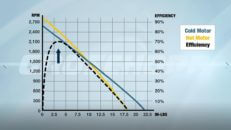
How to Choose an Electric Motor: DC Motors
In this video we discuss the construction, characteristics, advantages and disadvantages of DC Motors. We'll also look at the DC motor performance curves for speed, torque and efficiency.
-
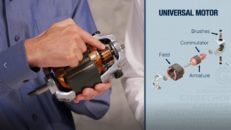
How to Choose an Electric Motor: Universal Motors
In this video we discuss the construction, characteristics, advantages and disadvantages of Universal Motors. We'll also look at the Universal Motor performance curves for speed, torque and efficiency.
-

How to Choose an Electric Motor: Application Criteria (Part 2)
This is part two of our discussion on application criteria. It seems obvious, but we like to remind our customers to always consider the maximum size and weight of motor their application will allow, and to know what kind of life expectancy the motor will need to have.
-

How to Choose an Electric Motor: Application Criteria (Part 1)
This video (and the next) cover important application criteria, first we'll focus on application constraints that need to be taken into consideration during the design process.
-

How to Choose an Electric Motor: Introduction & Basics
Selecting the right motor can be a complicated process. In this first video we introduce the basic concepts of electric motors.
-

How To Switch Your Voltage between 12V and 24V-48V on a Groschopp Brushless Control
This video shows a short step by step tutorial on how to switch the output voltage on a Groschopp brushless control.
-
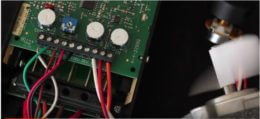
How To Set Current Limit on a Groschopp Brushless Control
This short video shows how to set your current limit on a Groschopp brushless control.
-
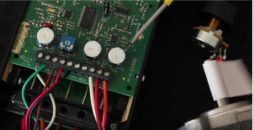
How To Set Gain on a Groschopp Brushless Control
Watch this video to learn about gain and how to set it on a Groschopp brushless control.
-

Groschopp Tech Tips: Motor Search Tool
This tutorial video shows you how to use Groschopp's motor search tool to find your ideal motor.
-

Tech Tips: Brushless Control Basics
By watching this video, you will learn the basics of all of Groschopp's brushless controls, their enclosure types, and low volt and high volt options.
-

Tech Tips: Oil vs. Grease
In this video, we will explain 7 factors to consider when deciding between oil and grease to determine which type of lubricant is best for your gear motor.
-
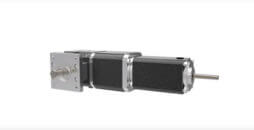
Planetary Right Angle DC Gear Motors
Groschopp offers a line of Planetary Right Angle DC Gear Motors that provide the advantages of standard right angle gearmotors without giving up efficiency.
-
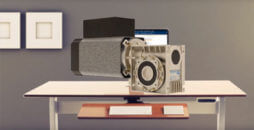
Groschopp Introduces Customizations and 3D Models
Groschopp makes it easy for to choose the right motor or gearmotor by incorporating 3D models into each product page as well as on the customization pages.
-
Tech Tips: Brushless DC Motor Basics
This Tech Tips video explains the basics of Brushless DC Motors: how they are designed and how they operate.
-
Tech Tips: Back-Drive & Braking
This Tech Tips discusses the advantages of back-drive and brakes and the types of applications for which they are best suited.
-
Tech Tips: Duty Cycle
In this video we give you a quick guide to importance of duty cycle for the optimal operation of fractional horsepower motors and gearmotors.
-

Tech Tips: Harsh Motor Environments
How fractional horsepower motors are rated for harsh motor environments. Understanding IP ratings and harsh duty requirements is important to accurately communicate an application’s requirements.
-
Tech Tips: AC Motor Basics
Understanding the characteristics of AC motors allows engineers select the motor best suited to their application.
-

The Groschopp Advantage
What makes Groschopp a special company to work with for our customers? It all comes down to the people that make up the company. Find out how they're at the core of the Groschopp Advantage.
-
The History of Groschopp, Inc.
The rich history of Groschopp, Inc. begins in 1930 with a company called Wincharger. How did we get from Wincharger to Groschopp? Watch and find out.
-
Tech Tips: How to Check for a Damaged Armature
Here are three quick checks you can perform with a volt/ohm meter to test a DC motor armature winding to determine if a motor armature is functioning properly.
-

New DC Brushless Motor
Introducing a robust DC Brushless Motor and gearbox combinations. The new Brushless motor is maintenance-free, highly reliable and has a life of 20,000+ hours.
-
Select a Gearmotor – 4 Steps
This how to video guide covers the basics of gearmotor selection in four simple steps: including speed, torque and application requirements.
-

Manufacturing Marvels
View Groschopp's manufacturing, quality assurance and engineering capabilities and get an inside look at Groschopp's manufacturing facility and engineering lab located in Sioux Center, Iowa.
